Nepal Needs You — Not Your Sympathy, But Your Solidarity
Standing with communities after the devastating floods
On 26 August 2026, a devastating flash flood swept through communities along the Bhotekoshi and Trishuli river systems in northern Nepal.
What followed was beyond what many communities could have imagined.
Homes disappeared under torrents of water, mud and debris. Roads and bridges were washed away. Farmland that families depended on for their livelihoods was destroyed. Entire settlements were left buried or changed beyond recognition.
Betrawati, in Nuwakot, was among the communities severely affected.
The flood came with terrifying speed. For many families, there was barely enough time to understand what was happening, let alone save their homes or belongings. Some managed to reach higher ground. Others were separated from their families. Many are still waiting for news of loved ones.
In the days that followed, the scale of the disaster became clearer. Thousands of people were displaced, while search and rescue teams continued looking for those missing. Access to many affected communities was also extremely difficult because roads and bridges had been destroyed.
For those who survived, the disaster did not end when the floodwater went down.
They were left asking very basic questions:
Where will we sleep?
What will we eat?
How will we cook?
How will our children stay warm?
How will we charge a phone or contact our families?
And where do we go from here?
Temporary shelters were established for displaced families, but these too had limited resources. In Betrawati, people staying in temporary tent shelters reported urgent needs including mattresses, blankets, clothes, cooking utensils and other basic necessities.
This is where our journey began.
Phase I: Going Where Support Was Needed
Through Explore Hub Nepal and Girls Empowered by Travel Nepal (GET Nepal), we decided that we could not simply watch the situation from Kathmandu.
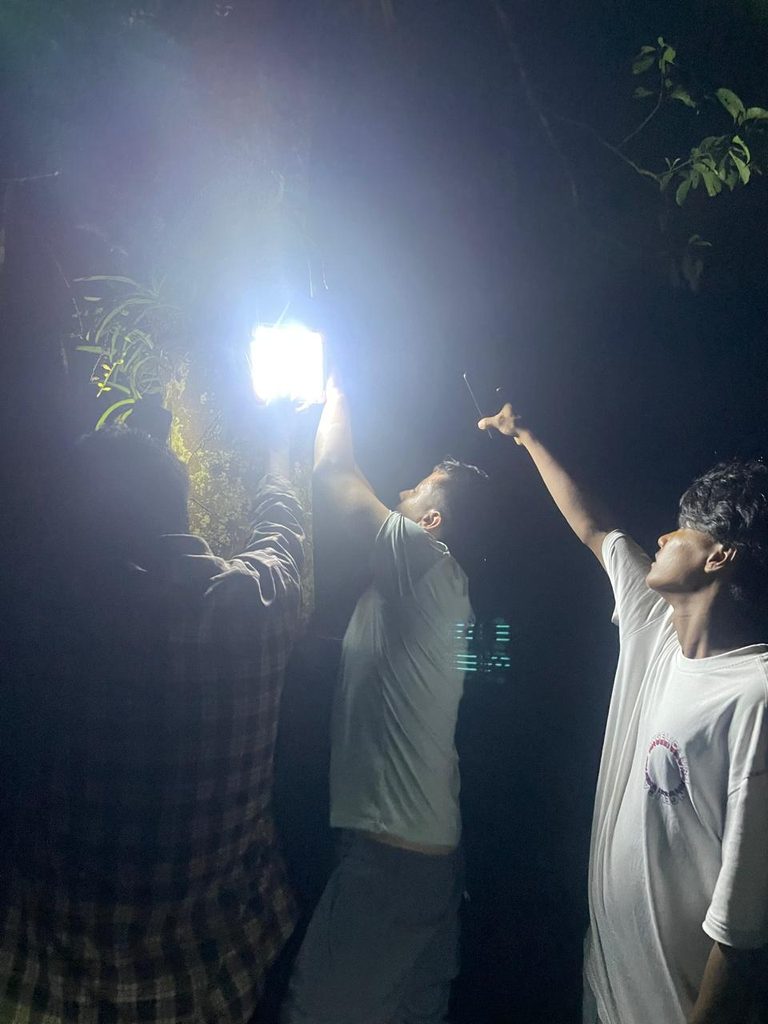
We went to Betrawati and Keraghari to meet affected families, understand the situation and provide immediate support.
Our first phase focused on basic necessities for more than 100 people and families.
We distributed:
- Solar lamps
- Tarpaulins
- Sanitary kits
- Underwear and essential clothing
- Other basic necessities
We also carried around 800 kg of sattu to support army personnel, volunteers and local people who were involved in relief and rescue efforts.
For us, these were not simply relief materials.
A solar lamp meant light at night when electricity was unavailable.
A tarpaulin meant some protection from rain.
Sanitary supplies meant women and girls could maintain basic dignity during an extremely difficult time.
And food meant one less thing for exhausted volunteers and affected families to worry about.
When we reached the holding centre, we also saw the challenges that cannot always be understood from a distance.
The centre was being managed largely by local people who were doing their best with limited resources. But the needs were much greater than what was available.
We saw the need for larger tents, mattresses, toilets, new or wearable clothes and other basic living materials.
It became clear to us that emergency relief would need to continue.
Phase II: Going Back With What We Had Learned
Our first visit changed our understanding of what was needed.
So, instead of treating our first distribution as the end of our work, we planned a second phase based on what we had seen and heard directly from the community.
This time, our focus was on improving the basic living conditions of families staying in temporary shelters.
We supported plans for:
Solar batteries and lighting
Kitchen utensils
Foam mattresses and bedding
Tents
New and wearable clothes
Underwear for women, men and children
Toys and materials for children
Electricity and communication were particularly important in the affected areas. Flood damage had disrupted electricity and communication services, making something as simple as charging a mobile phone difficult for displaced families. Generators and other emergency power solutions were being used in several affected communities, including areas around Betrawati.
We are deeply thankful to our friend Johanna from Shanti Trek, who helped us raise funds for our relief and sustainable livelihood programs.
Her support helped us continue responding to needs that were still present after the first wave of emergency assistance.
But Relief Cannot Be Only About Things
As we continued visiting the affected areas, we started thinking about something else.
What happens to children after they lose their homes, routines, schools and sense of normal life?
What happens to young women who are living in temporary shelters and trying to manage their own basic needs while their families are dealing with loss?
What happens when the cameras leave and the emergency headlines disappear?
These questions became increasingly important to us.
We did not want our work to be only about distributing things and leaving.
We wanted to stay connected.
Phase III: Returning to Listen and Understand
For our third phase, two members of Girls Empowered by Travel Nepal returned to the area for a recce.
The purpose was simple: to see what had changed and understand what people needed now.
Some of the temporary holding centres had already closed. In other places, families were still living in temporary shelters.
The situation was changing quickly, but recovery was far from over.
This visit helped us understand that our next step should include something beyond physical relief.
We wanted to create a space where children could simply be children again.
Our Next Step: Kids Engagement and Arts Program
We are now planning to bring our Kids Engagement and Arts Program to the affected communities for around one month.
Our volunteers will stay in the community and spend time with children through:
Storytelling sessions
Art and creative activities
Games and engagement activities
Learning and sharing sessions
Safe and supportive spaces for children
We also plan to work with young women by providing sanitary kits and other support based on the needs we identify in the community.
For us, these activities are not a replacement for rebuilding homes or livelihoods.
They are another part of recovery.
Children need opportunities to play, create, talk, imagine and connect with others. Young people need to feel that they have not been forgotten.
And communities need people who are willing to stay connected after the immediate emergency has passed.
From Emergency Relief to Sustainable Recovery
The floods have taken away homes, belongings, livelihoods and, for many families, loved ones.
But recovery is not only about rebuilding physical structures.
It is also about rebuilding confidence, connection and community.
Our work is therefore moving from immediate relief toward longer-term community support and sustainable livelihood programs.
We know that we cannot do everything.
We also know that we should not try to do this alone.
That is why we are building this work together with local communities, volunteers, friends, donors and organizations who believe in standing with people during difficult times.
Nepal Needs You — Not Your Sympathy, But Your Solidarity
The communities affected by the floods do not need to be remembered only when the disaster is in the news.
They need solidarity.
They need people who will listen.
They need support that respects their dignity.
They need opportunities to rebuild their lives.
And they need us to stay connected.
We are grateful to everyone who has already supported our work — those who contributed funds, donated essential items, helped with logistics, connected us with communities, volunteered their time, or simply shared our message.
Your support has already helped us reach families who needed immediate assistance.
Now, we hope to continue this journey together.
The flood may have changed these communities forever, but it does not have to define their future.
We want to keep showing up — not only during the emergency, but through the long and difficult process of recovery.
If you would like to follow our work and receive updates from the ground, please follow Girls Empowered by Travel Nepal (@getnepal) on Instagram.
We don’t need sympathy.
We need solidarity.
And we need to keep standing together.